
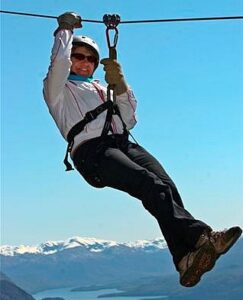
 Welcome to my website – the end result of many frustrating hours attempting to master the mysterious (to me, anyway) arts of “web design” and “Wordpress”. I really wanted a place to document my travels, share my trips with interested friends, and create a memory aid for myself and my carers when the inevitable Alzheimers sets in! “Adventure before Dementia” became my motto long before I embarked on my mammoth round the world expedition over 10 years ago now, and I am fortunate enough to have enjoyed more than my fair share of adventures for a 60-odd year old.
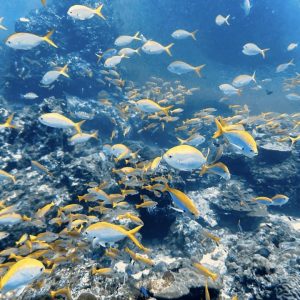
A Bit of T-L-C (Thailand, Laos, Cambodia) Part 17 - Out of Air and Out of Time Feb/Mar 2024
Our time in Thailand was running out rapidly and it was time to start heading back to Bangkok for our flight home. In our quest to find “the perfect Thai island” and wanting to finish our trip on a high, I discovered a website heralding Koh Phayam as Thailand’s “best kept secret” and a reminder of what this area was like before the tourist boom. It seemed worthy of investigating, but on the way we couldn’t resist the opportunity of exploring one of Asia’s premier dive sites, Richelieu Rock, highly rated by Jacques Cousteau himself!
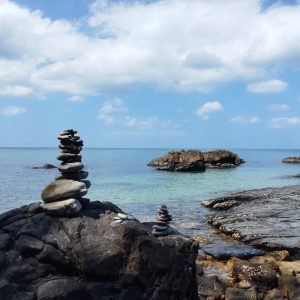
A Bit of T-L-C (Thailand, Laos, Cambodia) Part 16 - Familiar Ground Feb 2024
It took two plane journeys with a very tight connection plus a change of airport in Bangkok AND an overnight stop in Krabi town, but we finally made it to our “happy place”.
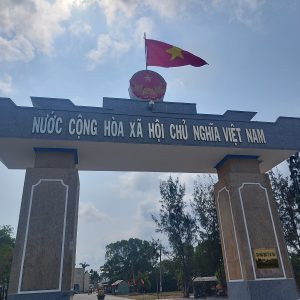
A Bit of T-L-C/V - (Thailand, Laos, Cambodia and a bit of Vietnam) Part 15...Feb 2024
We had planned to explore Vietnam on our next trip, but having found ourselves so close to the border, it would have been rude not to “pop over”. It wasn't quite what we'd expected...
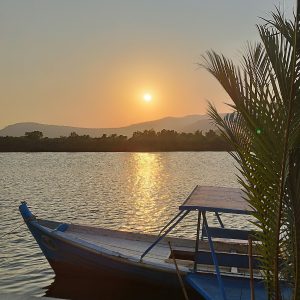
A Bit of T-L-C (Thailand, Laos, Cambodia) Part 14 - A Touch of Salt and Pepper ...Jan/Feb 2024
I’ve never been tempted to ride on one of those mechanical bucking bronco machines (apart from perhaps at my last work Christmas party when I was 8 months pregnant and feeling very impatient!) – but the speedboat ride back from Koh Rong to the mainland can’t have been much worse! Hoping to avert my seasickness, I foolishly sat outside on the deck only to be thrown a foot up in the air at every wave we hit. I managed (with assistance) to abscond back into the cabin where I valiantly held down my breakfast for the rest of the crossing.
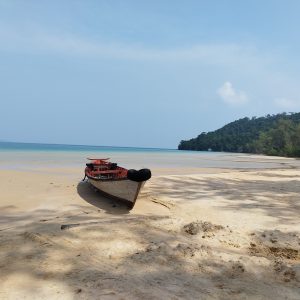
A Bit of T-L-C (Thailand, Laos, Cambodia) Part 13 - What Could Possible Koh Rong? ... Jan 2024
Our flight down to the port town of Sihanoukville went smoothly enough, and we managed to make our connection to the island ferry. We were advised to spend as little time here as possible due to massive over-construction taking place and sped over to the islands as soon as we could.
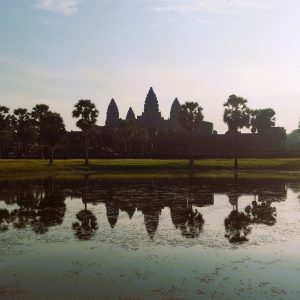
A Bit of T-L-C (Thailand, Laos, Cambodia) Part 12 - Angkor...Man!... Jan 2024
We had decided to head south, and although there was much more of Laos on our “to-do” list, we decided that a change of scenery – and eventually some beaches – were needed, so we took a short flight down to Siem Reap in Cambodia.
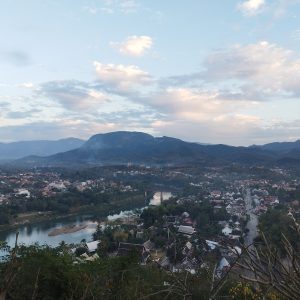
A Bit of T-L-C (Thailand, Laos, Cambodia) Part 11 - Time to Plan in Luang Prabang... Jan 2024
After our exertions at the Gibbon Experience, we were glad to have a day relaxing back in Huay Xai. Our next form of transport was a leisurely two-day slow boat journey down the Mekon to the riverside town of Luang Prabang.
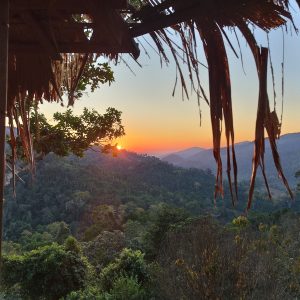
A Bit of T-L-C (Thailand, Laos, Cambodia) Part 10 - A Treehouse in Laos... Dec/Jan 23/24
When we heard about “The Gibbon Experience” in northern Laos, where you get to play out your primate fantasies by living amongst the treetops in the world’s highest treehouses, swinging along 15 kms of zip-lines…well, we just had to do it!
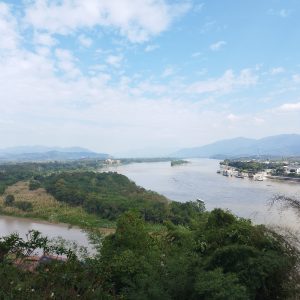
A Bit of T-L-C (Thailand, Laos, Cambodia) Part 9 - Chiang Rai and the Golden Triangle
Sounding a bit like a Harry Potter title, our next adventure took us to the very north of Thailand, although we weren’t departing from platform 9 ¾ at King’s Cross, but from the slightly less salubrious Chiang Mai Bus Terminal 3.
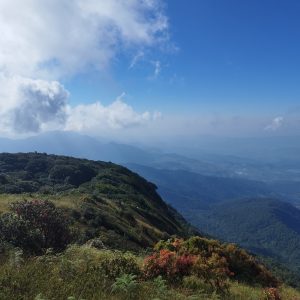
A Bit of T-L-C (Thailand, Laos, Cambodia) Part 8 - Completing the Loop... Dec 23
Breaking up our long drive to Mae Sariang the following day, we had hoped to view the vast fields of Mexican sunflowers. But after driving for miles up the mountainside, found we had missed out and they’d just finished blooming…typical!
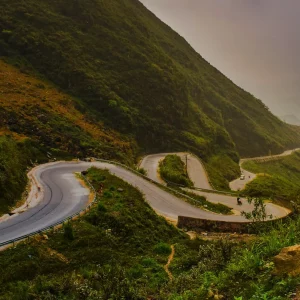
A Bit of T-L-C (Thailand, Laos, Cambodia) Part 7 - Doing the Loop... Dec 23
The Mae Hong Son Loop as it was known, was a famous long and winding road circuit (600 miles in total) from Chiang Mai through the length of the province. It was lauded as one of the most popular motorcycling tours in Northern Thailand, but feeling too old, nervous and fashion conscious to don leathers, we decided to tackle it on four wheels. It turned out to be a sensible move!
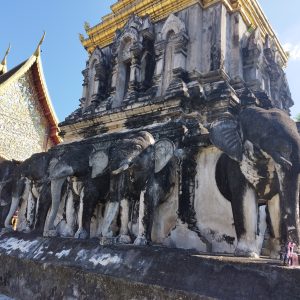
A Bit of T-L-C (Thailand, Laos, Cambodia) Part 6 - A Bit Awry in Chiang Mai...Dec 2023
After a 6 hour (which went v-e-r-y slowly) train journey to Chiang Mai, the last thing we wanted to hear when we arrived at our hotel was that our rooms weren’t ready. The very posh sounding Royal Peninsular Hotel was just outside the ancient walls of this famous city, and we were expecting a bit of luxury after our travels. I had been looking forward to visiting this much lauded destination, so reluctantly we dumped our cases and trudged off, tired and sweaty, to find somewhere to eat.
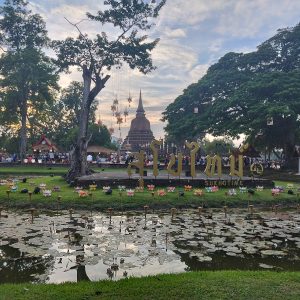
A Bit of T-L-C (Thailand, Laos, Cambodia) Part 5 - Suffering Sukhothai!...Nov 2023
The northbound express train had sold out, so we had 6 hours on a bus to our next stop – the market town of Sukhothai, to see the Loi Krathong Festival. Relieved that my hearing aid wasn’t fully operational, as we were sat next to a Thai lady who seemed to be reciting “War and Peace” in its entirety as she didn’t stop talking for the entire trip.
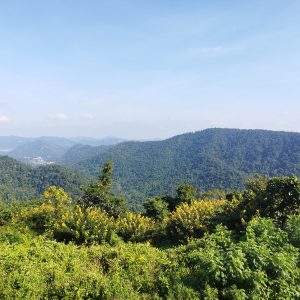
A Bit of T-L-C (Thailand, Laos, Cambodia) Part 4 - Back to Nature...Nov 2023
After towns, temples and tuk tuks, we were in the mood for a bit of flora and fauna, so we boarded the train once again, for Pak Chong (or as I kept calling it, “Pak Choy”) – actually very similar, both good for stir fries, but pretty bland! This busy gateway town was our base for a couple of days exploring the UNESCO World Heritage site and oldest national park in Thailand, Khao Yai.
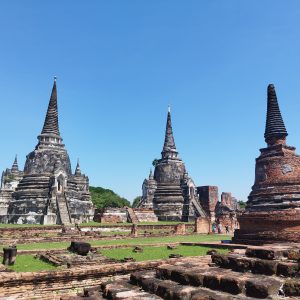
A Bit of T-L-C (Thailand, Laos Cambodia) Part 3 - Wats Going On Here Then?...Nov 2023
Arriving in Ayutthaya you might be forgiven to thinking you’d taken a wrong turn and landed in the middle of the Angkor Wat complex in Cambodia. Set on an island, this former capital of Siam was brutally conquered by the Burmese in the 1700s, but the remains of this once grand and cosmopolitan city give an insight into its former glory.
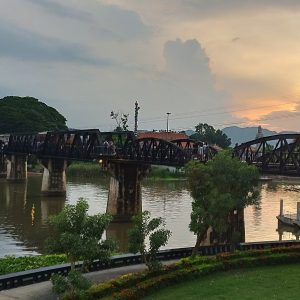
A Bit of T-L-C (Thailand, Laos, Cambodia) Part 2 - Bridge Over Troubed Water...Nov 2023
Standing on the banks of the River Kwai, we noticed a lady of about our age sitting at the hotel restaurant. She eventually wandered over to us and started a conversation. It turned out that her father was a Medical Officer and POW here in Kanchanaburi...
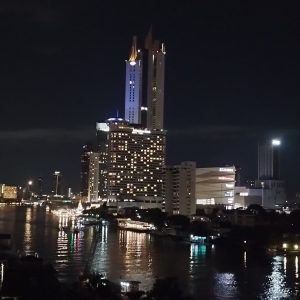
A Bit of T-L-C (Thailand, Laos, Cambodia) Part 1 -Taking Stock in Bangkok...Nov 2023
The “scenery” was certainly different as we arrived in Bangkok’s Chinatown where we’d chosen to acclimatise for the first couple of nights of our next epic trip. The area was thronging with tourists and locals alike enjoying the atmosphere and the copious street food stalls which filled the pavements...
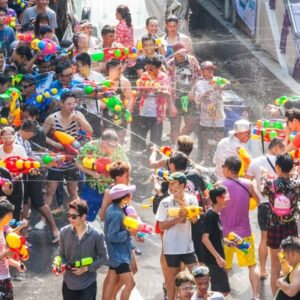
Thailand Fling Part 18 - Wet and Wild in Bangkok... April 2023
We had a few hours to kill in Prachuap before making our final journey by train back to Bangkok, but trying to stay dry as we dodged buckets of water being hurled from the roadside and hiding from van loads of youngsters wielding water guns, proved quite challenging!
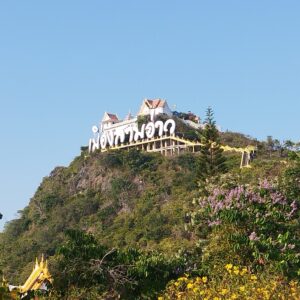
Thailand Fling Part 17 - Too Hot to Handle...March/April 2023
They may not have the most “user friendly” website in the world, but I have to hand it to Thai National Railways, their trains are extremely well managed. With uniformed guards to assist you with your luggage, comfortable air-conditioned carriages and even a complimentary meal and drink, they’re better than most of the airlines we’ve flown with and definitely preferable to travelling by minivan.
Thailand Fling Part 16 - To Infinity and Beyond...March 2023
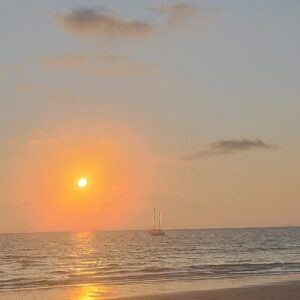
So far, our favourite place on the trip had been the laid-back island of Ko Lanta, so we decided to spend one more relaxing week there before slowly making our way back up to Bangkok.
Thailand Fling Part 15 - Familiar Territory...March 2023
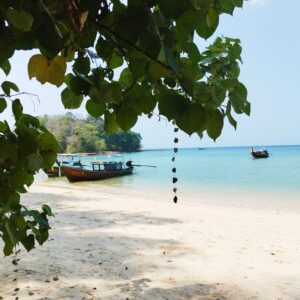
I never expected to feel quite so at home at “the Palace” but as we walked into the impressive lobby at the Ayodhaya Palace in Nopharat Thara, Krabi, the familiarity was welcoming, after months “on the road”.
Thailand Fling Part 14 - A Taste of the East...March 2023
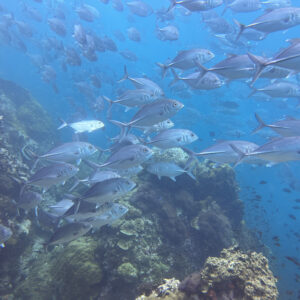
Our next transfer involved two buses and a ferry, but everything ran very smoothly and within a few hours we found ourselves on the opposite (Eastern) coast of Thailand, on the island of Koh Samui.
Thailand Fling Part 13 - A Birthday to Remember... February 2023
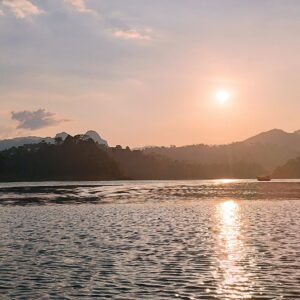
Arriving in the Khao Sok National Park – allegedly the “oldest rainforest area in the world” – I thought it would be a cinch to arrange a special day for “nature lover” Ian to enjoy on his birthday. Clambering for several hours in 90% humidity, uphill through dense jungle to view some rare flowers, apparently wasn’t it!
Thailand Fling Part 12 - Nightmare Beach...February 2023
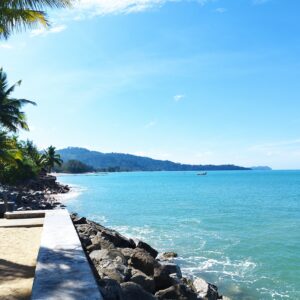
Our return to Thailand was somewhat muted by the reoccurrence of Ian’s food poisoning symptoms, and the memories of the catastrophic tsunami that affected this part of the Thai coastline that tragic Boxing Day in 2004.
Thailand Fling Part 11 - East Meets West...January 2023
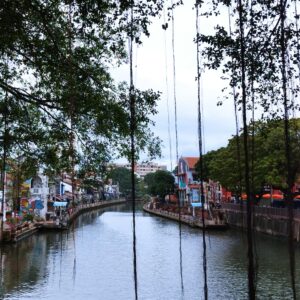
Like Georgetown, this once important trading hub situated on the straits between Malaysia and Indonesia, Malacca (or Melaka if you prefer) had a varied and interesting history. Influences from the original Malays, the Chinese and Indian settlers, and then the European colonizers – the Portuguese, Dutch and British combined to make this a gloriously multi-cultural city, and a UNESCO World Heritage centre to boot.
Thailand Fling Part 10 - Bright Lights, Big City...January 2023
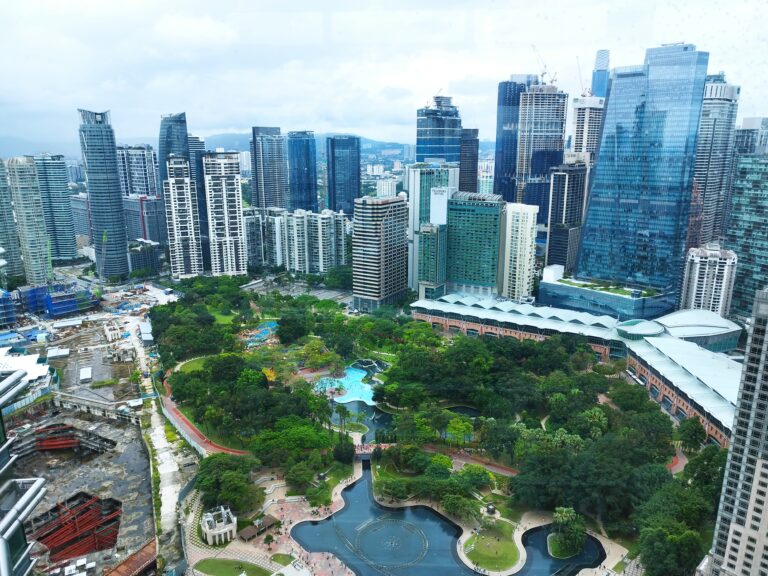
Our ears popped as we were whizzed up to the 43rd floor of our apartment complex in a matter of seconds. It had been over a decade since I last visited Malaysia’s capital city, Kuala Lumpur and I was astonished at the masses of high-rise developments that had sprung up everywhere.

Thailand Fling Part 9 - High Tea...January 2023
Walking into town from our mock Tudor style guesthouse in the Cameron Highlands, wearing my new sweater (yes it was 19 degrees but felt decidedly chilly!) amongst positively alpine scenery, with the Arabic call to prayer in the background was quite bizarre, I have to say.
Thailand Fling Part 8 - Drive Time... January 2023
Transportation in Malaysia seemed more challenging than in Thailand, so we swapped ferries and buses for our own four wheels. We were told that the road system and driving was much better here, so filled with confidence we rented a car for a couple of weeks to discover some of the country.
Thailand Fling Part 7 - And now for something completely different... January 2023
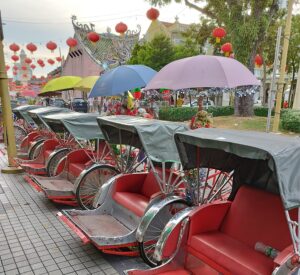
It felt as though we had been dropped in the middle of a film set as we alighted from our taxi in Armenia Street, in the historic centre of Georgetown, on the island of Penang.
Thailand Fling Part 6 - Christmas Island and A New Year, a new country December 2022
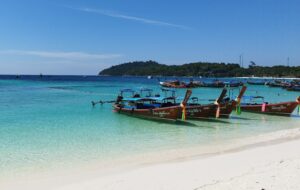
Departing the mainland from the Thai region of “Satun”, we did wonder if we were about to enter “hell” on our arrival in Koh Lipe...

Thailand Fling Part 5 - Mud, Sweat and Piers December 2022
Our next port of call was the tiny island of Ko Mook or Koh Muk. However, we soon learnt that it should be re-named “Ko Mud” as the lanes that traversed it rapidly turned to quagmires in the torrential rainstorms that returned to plague us over the next few days.
Thailand Fling Part 4 - Laid Back in Lanta November 2022
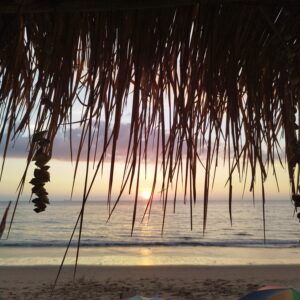
The transfer by speedboat to our next destination wasn’t quite the jet-setting “James Bond” style entrance I had imagined...
Thailand Fling Part 3 - Ferry Tales November 2022
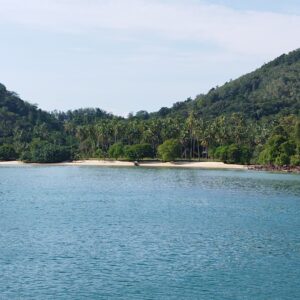
A disappearing island…well, that’s what it seemed to be when sitting looking out to sea from our balcony. Some days it was there, but when the clouds moved in and the heavens opened, it faded into the greyness. We were intrigued...
Thailand Fling Part 2 - A Change of Plans October 2022
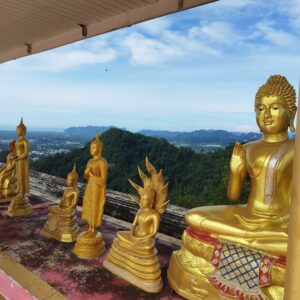
The pace slowed down further as I finally succumbed to the cough and cold that Ian had been nursing since before we left home. Dosed up with various local remedies (amazing what you can buy over the counter here…), I was grateful that at least I now had the opportunity to rest up and recover.
Thailand Fling Part 1 - First Stop... Paradise October 2022
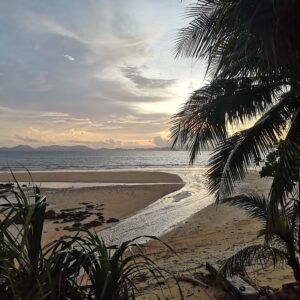
Here I am at another of life’s “crossroads”, this time at the bus stop on the corner waiting for some “reasons to retire” when, like buses, several come along at once: Surviving Covid and its fallout - Turning 60 (I know!) while still enjoying reasonably good health - A reasonable pension (which will go much further where we are going…) - The imminent cost of living crisis - The end of the world as we know it - The UK going to hell in a handbasket - West Ham’s mediocre start to the season - And finally… why not?? So, after what feels like months of planning, we set off for Thailand for the winter.
The Way to San Jose... Costa Rica, Jan 2022
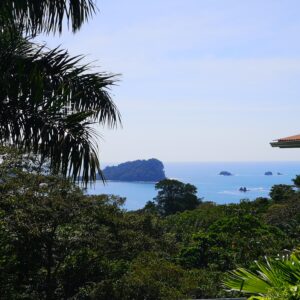
..felt like a very long way, after navigating the queues to check in at Gatwick, having to re-scan our vaccination certificates on arrival, and then Ian losing his spectacles while waiting for our bags. What with the 6 hour time difference and a very bumpy 3 hour journey by road to our first destination I was glad that Ian wasn’t driving and we were ready for bed on our arrival in Monteverde. We didn’t expect to be woken by howling winds. Had I dreamt it all, and we were back in the depths of the British winter?
Break for the Border...La Fontañera, Spain October 2021
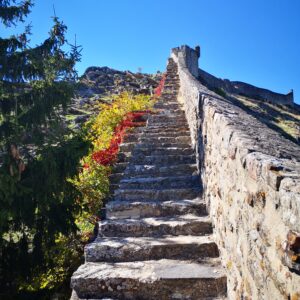
"I'm positive!!"...in different times, the words uttered by my partner would have been met with delight and encouragement, but they were NOT what I wanted to hear the morning we were expecting our COVID PCR results.
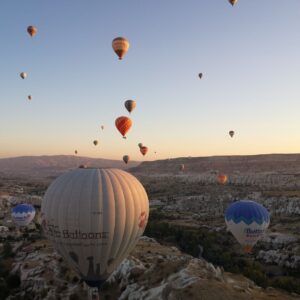
Planes, Caves and Numerous Hills - Cappodocia, Turkey Oct 2020
The summer was almost over, more Covid lockdowns were threatened and I desperately needed an escape. The list of countries on our exemption list was diminishing by the minute, and a damp weekend in Clacton just wasn’t going to cut it. So when my son Dan suggested we meet up in Cappadocia, Turkey my interest was piqued. I’d always been enthralled by the images of multi-coloured balloons gliding over the strange rock formations, carved out and inhabited by generations of cave-dwellers. So channelling my inner Flintstone, I “clubbed” together with Dan and my partner Ian and set off on our “mammoth” adventure.
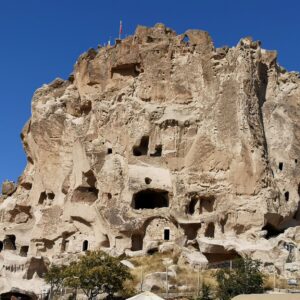
Castles in the Sky… Uçhisar, Turkey Oct 2020
The interesting terrain in this part of Anatolia lends itself to exploration by foot, and we have come prepared with our hiking gear (in Dan’s case an old pair of trainers and his school backpack!). We were grateful for our walking boots as the terrain became increasingly treacherous as we made our way along Pigeon Valley the following morning. After a few wrong turns, we were glad to make a pit stop at the Calgary Tea Room which surprised us as we rounded a steep bend on the route. The scenery resembled the American Wild West, with sandstone arches, majestic canyons and the ever present fairy chimneys. The Valley is named after the copious amount of pigeon houses carved into the rock. Apart from a food source, but now regarded as “sacred”, the ancients used their droppings as fertilizer – no sh#t!
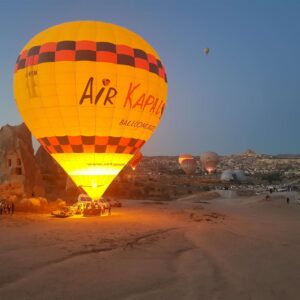
Up, Up and Away… Cappadocia, Turkey Oct 2020
We caved in early, in anticipation for our sunrise balloon trip the next morning. We soon reached the valley where we would begin our ascent and the sight of hundreds of hot air balloons in various stages of inflation was one I’ll never forget. Our excitement swelled along with the bright nylon as hot gas was pumped into it by huge fans, lighting the balloon up like a magic lantern. Finally, like Andy Pandy, Teddy and Looby Lou, it was time for us to jump into the basket.
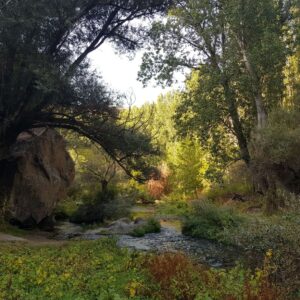
Drop Dead Gorges... Cappadocia, Turkey Oct 2020
Grateful for once that we’d chosen Dan as our nominated driver, we wound our way down the narrow lanes in our rented car and set off for a road trip to the Ihlara Valley. My impression of Turkey as a cultured but economically underdeveloped country was quickly dispelled as we passed factories and towns which wouldn’t have looked out of place in Western Europe.
Drier Straits! - Istanbul, Turkey Oct 2020
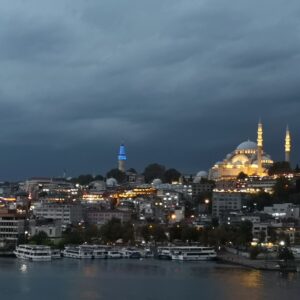
After a very early start, we bid farewell to Ian at Istanbul (he was due to return to work so travelled straight back to London to quarantine!) and took the coach through the traffic into the city. Constantinople, as it was called back in the 30’s, had always sounded like one of those exotic places you read about in spy or adventure novels and I was looking forward to exploring. Dan had stayed here previously on a couple of occasions (once worryingly just before terrorists planted a bomb at a nearby nightclub). Istanbul had always been on my bucket list and I had originally planned to visit once things were safer - what better time than in the middle of a pandemic?!
Raining Cats and Dogs… Istanbul, Turkey Oct 2020
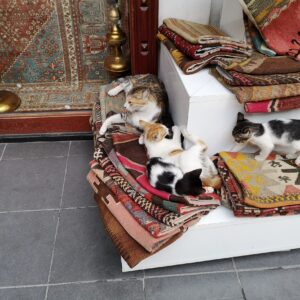
The rain had eased a little the next morning so with aching legs, we rode the “Tünel” - a historic subway funicular built in 1875, making it the world’s second oldest underground urban rail line after the London underground. The line consists of only two stations, the historic carriages carrying you from Karaköy (sea level), climbing around 60 metres, reaching the upper station, Beyoğlu after travelling just over 500 metres. It doesn’t sound very far, but if you’d climbed as many stairs and hills as we had during this trip, it was a godsend!
Night Boat to Breda May 2020
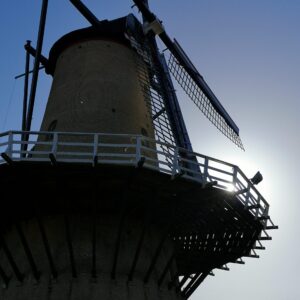
Under the cover of semi-darkness, “Pearl Earring”, her code name for this mission, made her way through the park, hoping that she wouldn’t be recognised. She imagined suspicious eyes boring into her back and it felt as if she was dragging a headless corpse behind her instead of a wheelie case… Thankfully the station was deserted as she boarded the train to the docks to pick up the night ferry. Her first mission…. to reach Holland by first light, undetected…
In the Red Hurghada Apr 2015
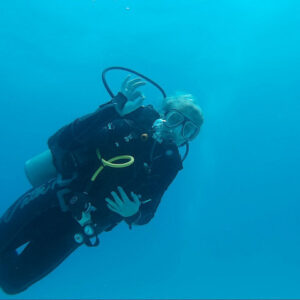
"Let's meet somewhere in the middle", said Dan clearly missing his dear old mum (and some time off work) after four long months. And to be honest I was looking forward to some quality time with my eldest, not to mention a bit of r & r somewhere hotter than Essex.
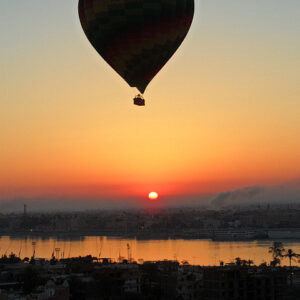
Death (of Tourism) on The Nile Luxor Apr 2015
Feeling like visiting royalty (especially as Dan insisted on wearing his ghutra (Saudi headdress) as a sun-hat, we were waved through the numerous check-points on the 4 hour taxi journey to Luxor. Apart from the half-built railway line that followed the road and the occasional car (and tank!) it could have been the turn of the century... the 20th century!
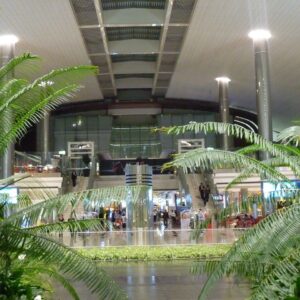
Dubai Airport Jan 2014
Sitting, once again, on route backwards and forwards from London to Perth, trying…but somehow never….quite…..succeeding…. to rack up enough Emirates Skywards points to upgrade to “Silver” card status. Oh how I covet that shiny little card – so much better than the plain old blue one, that they have somehow never gotten round to sending me. Each time I get within a couple of thousand miles of the magic figure I need, they expire and I’m left back at square one again. Firmly in the “no upgrades and extra luggage allowance for you, missy” level of social strata. If I had a silver card, well I would now be sitting amongst the bling in the Emirates lounge, with a cold glass of wine in my hand and a convenient convenience within easy strolling distance.
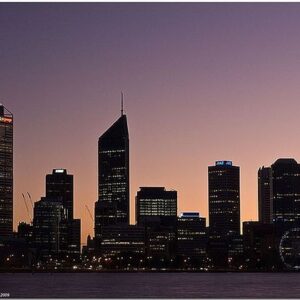
Ponderings of a Pom in Perth 2011 - 2012
Hello Possums! Most of you by now will probably be well aware of the tumultuous events of my life over the past few months and know the reason why I am currently living in Perth, Western Australia. For those who have missed out on the catch up e-mails, Facebook updates, Skype calls, etc. here's an edited "omnibus" edition of my life since I returned to Oz...
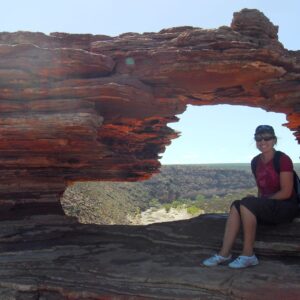
Round the World Adventure 2010
So, here I find myself at another crossroads in my life about to take a deep breath and step into the unknown. I`ve been told that I`m `brave`, but I don`t think that it`s courage that`s brought me here. More a sense of curiosity and adventure to see what else is out there. A real drive to experience new places and people, visit at first hand those places I`ve pored over in brochures and travel books. And finally a quest to fit in as much `living` before I might lose the urge or be unable to do all those things I want to do and go to all those places I`ve always wanted to visit.